

Why do the best book ideas always hit in the middle of the night? Just as you’re about to drift off to sleep, a great idea for a novel pops into your head. Whether it’s a scene, a character, or a line of dialogue, in that moment it feels like the most brilliant thought ever. You grab your phone, quickly jot it down in your notes app, and roll back over, already dreaming of your future book tour.
Then morning comes.
You read your midnight note, only to find it’s a jumbled mess of unfinished thoughts with no context whatsoever. There’s a spark, sure, but you have no idea how to turn these late-night scribbles into a fully-fledged story.
Now, you have two choices: give up and toss your concept into the pile of other discarded book ideas, or push through the confusion and develop this seed into a ready-to-write plot for your debut novel.
Keep reading to learn exactly how to turn your novel idea into a finished book outline ready to become the next bestseller.
Freeform Writing
The first step to developing your book idea is to get your every thought about it down on the page. Freeform writing is an exercise designed to let your mind run wild. The intention is just to WRITE. Using a blank document or new notebook page, write down anything that comes to mind in regard to your book idea. This might be characters, world-building, or plot points, there are no wrong answers.
Give yourself at least 30 minutes to simply write.
The Why
With all the ideas on the page, the next step is to consider why you want to tell this story. Writing a book is a huge task and to give yourself the best chance of success, you are going to need to truly care about your story. Why this book idea?
To help you explore the subject, try and respond to the following four questions:
Why is this story special?
What do you want this book to say?
What is the most memorable element of this novel?
Why does the story start at this moment?
Not only should you know why you want to write this book, but you must also consider why someone else would want to read it. This element is known as the ‘hook’ and is what will make your book stand out on the shelves.
What makes a reader care about this story?
How does the situation change to create interest?
Why does the reader want to keep reading?
The Who
This section is going to help you create the characters in your book. The goal is to be able to clearly picture them in your mind and know everything about their backstory, personality, and values. Truly knowing a character will make it easier to write their actions and reactions to various situations within your book idea, as well as helping you to keep their personality and character arc consistent.
Fill in the following questions for each of the main characters in your story idea:
Appearance
Age:
Ethnicity:
Physical description:
Information
Occupation:
Income:
Hometown:
Current location:
Living Situation:
Family members:
Relationship with each family member:
Values, Belief, World View
Religion:
Priorities:
Personality:
Loves:
Likes:
Dislikes:
Hates:
Greatest Fear:
Greatest Desire:
The What
It’s time to start creating the plot. By considering the story beats of the book outline, you can start to explore your themes, pace, and character arcs in more detail. This will also give you clear direction once you start writing.
Use these writing prompts to build your book outline:
Beginning:
- Opening Image: What happens in your opening chapter?
- Set-Up: How will you introduce the main characters and their world?
- Inciting Incident: What is the event that changes everything for your protagonist and sparks the plot?
Middle:
- Action Point #1: What is the first challenge your characters face?
- Mid-Point: Where are your characters physically and emotionally midway through the story?
- Action Point #2: What obstacle stands between your characters and their desires?
- Crises: What causes the ‘all is lost’ moment where your characters are at an all-time low?
End:
- Climax: What moment of your story has the highest emotional stakes and do your characters overcome it?
- Resolution: How is your story going to end?
The When and The Where
This refers to the world-building of your book outline. To further develop your novel idea, you should imagine the setting in which the story takes place. This might be an era, a real-world location, or a fictional dystopia.
Answer these questions to get a clearer image and idea of the world your book idea is set in:
Is your idea set in a real or fictional world?
What era/year does it take place in?
What are the rules or laws of this place?
What kind of social hierarchy or class system is in place?
What is the geography or landmarks in the surrounding area?
Where did your protagonists grow up?
Where do your protagonists live now?
Where will your protagonists end up?
The How
The how goes beyond just the plot of your book idea and delves into the style, tone, and voice of your novel. How you write can change a reader’s interpretation of the characters, story, and message, not to mention will represent your voice as a writer. In many ways, the how is the most personal aspect of story crafting.
Here’s what to consider before you start writing your book:
Style
- Will you use first-person, second-person, or third-person narration?
- Do you want your book to have a contemporary or a classic feel?
- What writing style best suits the story you want to tell (e.g., formal, informal, conversational, lyrical)?
- How descriptive do you want your writing to be?
- Do you prefer a linear narrative or a non-linear structure?
Tone
- What is the overall mood you want to convey in your book (e.g., serious, humorous, dark, uplifting)?
- How do you want readers to feel while reading your book?
- How will the tone change throughout the story?
Voice
- Who’s perspective is the book written from?
- Is the voice of your book more formal or conversational?
- What kind of vocabulary and language will the narrator use?
What’s next?
It’s time to write!
Don’t panic! There are so many online resources to support you in turning your book outline into a bestselling manuscript, including many articles on this blog.
Start here:
10 Essential Writing Exercises to Access Your Creative Flow
10 Expert Steps to Build Your Writing Self-Confidence
How to Plan a Novel in One Week
You’ve proven to yourself that this idea is important, developed, and worth writing.
Don’t let the fear of starting stop you from trying.
Like this? Read Related Posts:
4 Realistic Freelance Writer Side Hustles to Start in 2026
Before I started as a content writer, the idea of it was a little bit overwhelming. I didn’t have any published work, I had no idea how to start making money writing, and I didn’t know which freelance writer side hustles were legitimate…and which would just be a total waste of time. Luckily for you,…
How to Start a Blog in 2026 (for free): A Step-by-Step Guide
Get the full guide and learn not just why it’s worth starting a blog in 2026, but exactly how to do it…
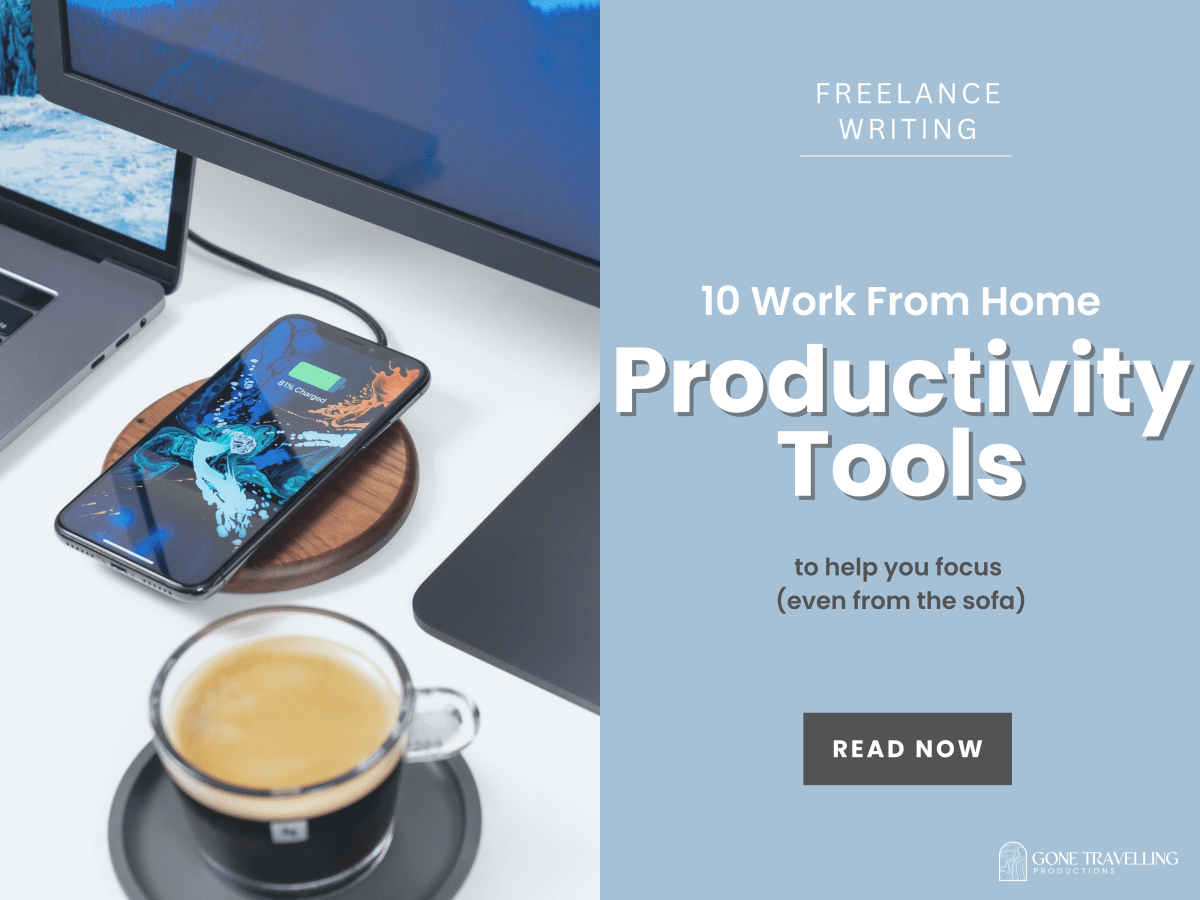
10 Work From Home Productivity Tools to Help You Focus (even from the couch)
The 10 best gadgets, software, and tools that I use daily to stay productive when working from home.


 Gone Travelling Productions
Leave a comment