

Note: This post contains affiliate links which I may earn a small commission from, at no extra cost to you.
Choosing the best destinations to see the autumn leaves in Japan can be overwhelming. Here’s the good news: no matter where you go, it’s going to be beautiful. Getting to witness the reds, golds, and yellows is an absolute highlight of life in Japan and dare I say it…might be even better than cherry blossom season.
In this post, I’m sharing my advice on how to have the best trip to Kurobe Gorge with details on exactly what to expect.
Keep reading to learn:
- What is Kurobe Gorge?
- Where is Kurobe Gorge?
- When to visit Kurobe Gorge?
- Where to stay in Kurobe Gorge?
- Kurobe Gorge Itinerary
- Tokyo Trips
What is Kurobe Gorge?
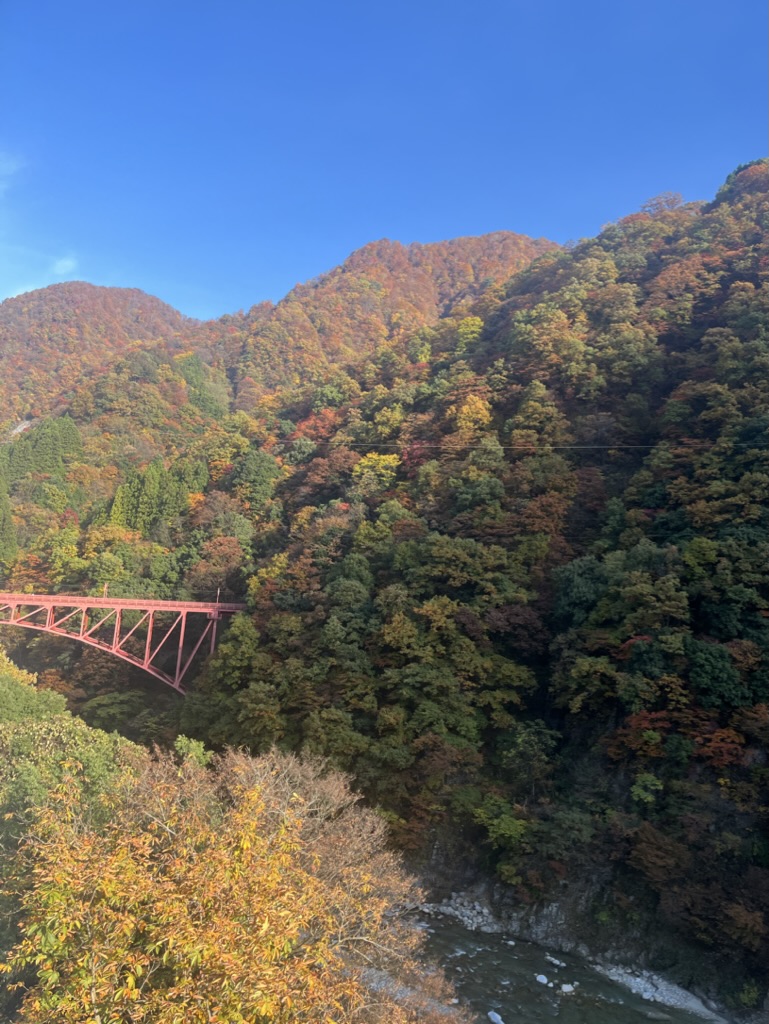
Kurobe Gorge is a stunning valley on the east coast of Honshu in Japan. A secluded mountain destination, the area is most famous for its unmatched autumn foliage (known as Momiji in Japanese) and scenic train.
Most people access the gorge from Unazuki Onsen, a small town with a handful of hotels, restaurants, and onsen as well as several families of monkeys – literally. From Unazuki, you can take the scenic train through the gorge, stopping at a few sweet little stations along the way.
The train used to run 80 minutes one-way to Keyakidaira station but due to the January earthquake, it now stops at Nekomatta station for a 50-minute one-way journey or 2-hour round-trip.
Fingers crossed, the rest of the railway line can be fixed soon, but I found the scenic railway to still be magical and absolutely worth the trip without the last two stops.

Where is Kurobe Gorge?
Kurobe Gorge is a little over one hour from Toyama City by train or car, snuggly hidden on the edge of the Japanese Alps. The easiest way to access the Gorge is via Unazuki Onsen town through Unazukionsen Station on the Toyama Chiho Line. A few minutes from the main station is Unazuki Station where you buy tickets and board the Kurobe Scenic Railway.
How to get to Kurobe Gorge from Tokyo
The fastest route from Tokyo to Kurobe Gorge is to take the Hokuriku Shinkansen from Tokyo Station to Kurobe-Unazukionsen Station. From there, walk across the street to Shin-Kurobe Station and board the Toyama Chiho Line for 25 minutes to Unazukionsen Station.
Be aware, Shin-Kurobe is a super tiny station that doesn’t accept IC cards, instead, you collect a paper ticket when you board the train which you pay for at Unazukionsen Station.
TOP TIP: Make sure to bring plenty of cash as most places in Kurobe Gorge are cash only!
Kurobe Gorge to Tokyo:
Shinkansen: Tokyo Station → Kurobe-Unazukionsen Station (2 hours 20)
Walk: Kurobe-Unazukionsen Station → Shin-Kurobe Station (5 minutes)
Toyama Chiho Line: Shin-Kurobe Station → Unazukionsen Station (25 minutes)
Total Cost: 12,500 – 13,000 yen

When to visit Kurobe Gorge?
The Kurobe Gorge Scenic Railway runs from mid-April to late November and is most famous for the autumn leaves and koyo (the colours of autumn foliage) where the entire gorge turns red, gold, and yellow. November is the peak season meaning more tourists than usual, but something I love about Kurobe is that it is never overrun by visitors. Even on the busiest of days, the scenic train has a limited number of seats meaning you get to enjoy the beautiful views in relative peace.
In Spring and Summer, the colours of the gorge still mesmerize. The mountains are coated in deep forest greens with aquamarine blue water that you can dip your feet into to cool off from the hot and humid weather. The off-season also means even fewer tourists than usual for a truly tranquil mountain getaway.

Where to stay in Kurobe Gorge?
There aren’t too many options when it comes to staying in the gorge itself but don’t forget you can always stay in nearby towns or even Toyama City.
Here are my recommendations for staying in Kurobe Gorge:
Kuronagi Onsen Ryokan
For an experience like no other, you can stay at Kuronagi Onsen Ryokan. Be warned, the ryokan is a 20-minute valley-side walk from Kuronagi Station on the scenic railway line but the views and experience are without a doubt, worth it. Peace is brought to a whole new level with rural open-air bathing and intricate authentic Japanese meals.
Address: 宇奈月町 黒薙, Kurobe, Toyama, 938-0282
Hotel Kurobe
I stayed at Hotel Kurobe, a beautiful onsen retreat built right into the mountainside. They have an amazing outdoor onsen that’s open all night long for views of the gorge as well as stunning tatami rooms, a shuttle bus between the hotel and the town, and a delicious traditional Japanese breakfast.
Address: 7 Unazukionsen, Kurobe, Toyama 938-0282
Entaiji
Entaiji is a ryokan-hotel hybrid that brings guests a truly luxurious stay. Located close to both stations, you can fully lean into Kurobe Gorge’s tranquillity in their large onsens and beautiful traditional Japanese rooms. Entaiji also presents guests with gourmet meals with breakfast and dinner included.
Address: 53 Unazukionsen, Kurobe, Toyama 938-0282
Kurobe Gorge Itinerary
I visited Kurobe Gorge on a weekend trip from Tokyo in November 2024. This is the itinerary I used and will be recreating exactly in the future.

Day 1: Tokyo to Unazuki Onsen
Take the Shinkansen from Tokyo Station to Kurobe-Unazukionsen Station and change to the local line to Unazukionsen Station. Check in to your hotel, enjoy a delicious dinner, and enjoy a long dip in one of the town’s many outdoor onsens.
Day 2: Kurobe Gorge
I recommend a sunrise onsen dip before heading to Kurobe Station bright and early to have your pick of trains. The ticket office opens at 7:45 am but one thing to know about Japanese people is that they are early. The trains don’t usually sell out, but it’s easiest to get your ticket first thing to save time in the queue later on. Return to your hotel, eat a filling traditional breakfast, and get ready for the day.
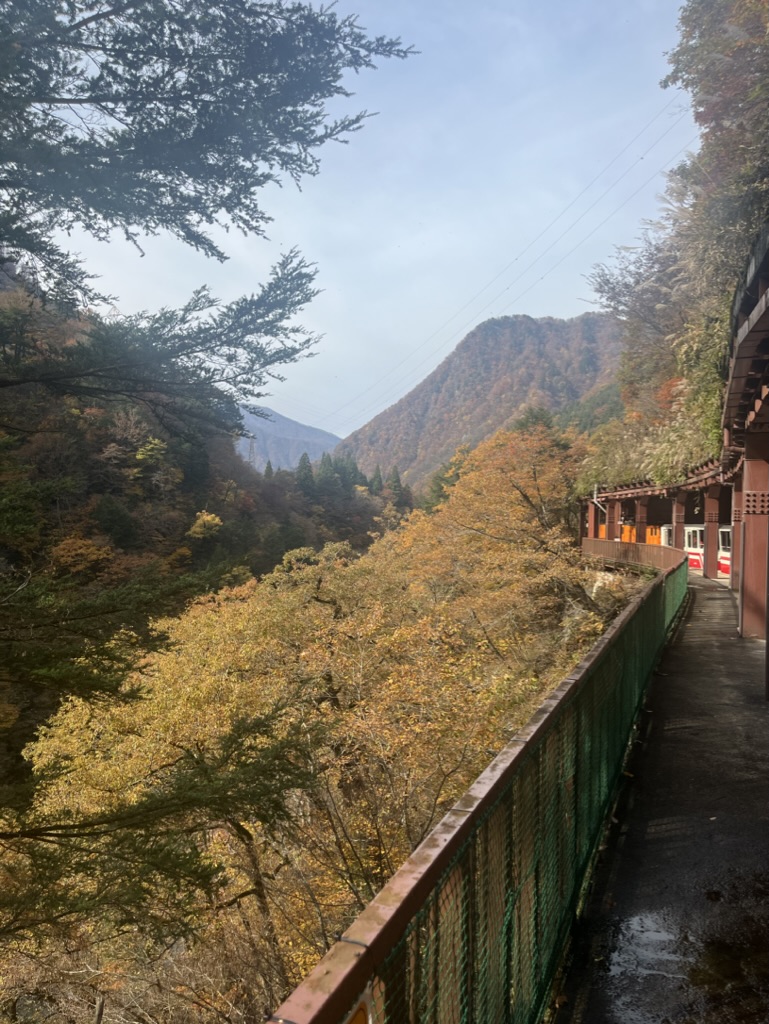
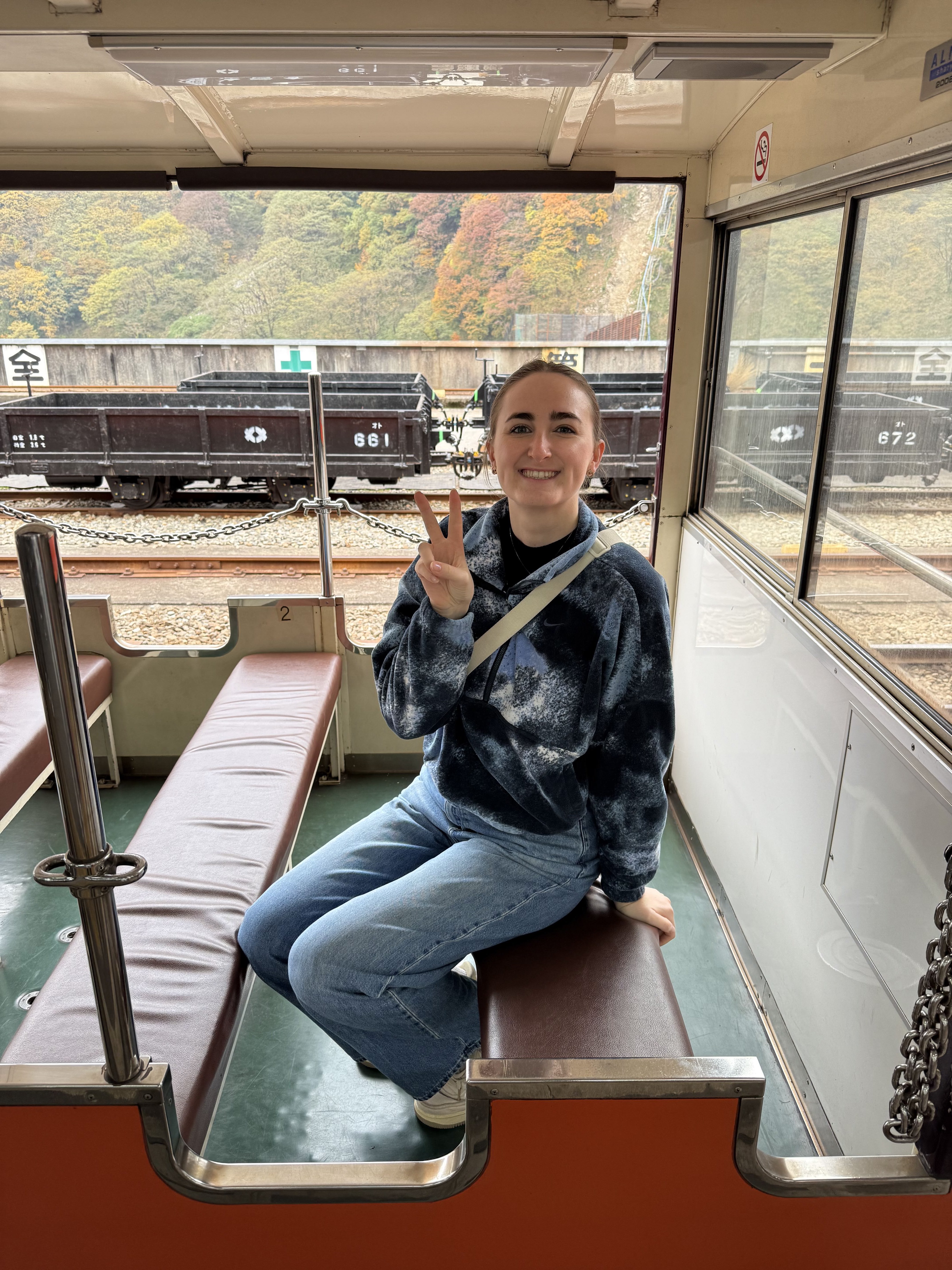
I arrived back at the station half an hour ahead of my 10:22 am train to be at the front of the line. The train runs along one edge of the gorge so for the ultimate views, make sure to sit on the right-hand side! The closer to the front of the line before boarding, the easier it is to secure the best seats. The scenic train ride was one of my all-time best Japan experiences so get ready to have your mind blown at the natural beauty.
The train takes 50 minutes to arrive at Nekomatta Station where you can get off for a 20-minute toilet and photo break. Hop back on the train and ride around 30 minutes to Kuronagi Station where you’ll get off. The station is a beautiful place for photos and just 20-minutes along the valley-side path is Kuronagi Onsen where you can bathe or grab lunch. They serve a selection of amazing Japanese lunch options but just make sure to bring cash! I went for the hot kinoko udon and savoured every bite.
Return to Kuronagi Station and wait for the next train towards Unazuki Onsen. For the return train, you can sit anywhere with an available seat – just be prepared to wait for one or two trains and probably sit on the less ideal side of the carriage.
Back in Unazuki Onsen, you can explore the town for sweet souvenirs, Okinawan ice cream, and mischievous monkeys. The views are incredible from every street and I found it impossible to go more than five minutes without taking photos.
You can either stay another night in Unazuki Onsen or take the local line to a nearby town for cheaper hotel options. I stayed at a business hotel in Ouzo.

Day 3: Toyama
Enjoy a slow morning before checking out and finding some breakfast. Once ready, hop on the train toward Toyama City where you can leave your bags in a locker at Toyama Station – trust me, they’re super safe and cheap.
In Toyama, you should visit Kansui Park, take a quick trip to the coast, and make sure to try a Toyama Sushi Set as the city is famous for its seafood and fresh nigiri. If you have more time, you might want to visit Takaoka and the Amarahashi Coast too.
Return to Toyama Station and take the Shinkansen directly back to Tokyo Station on Sunday evening.
Tokyo Trips
Looking for more day trips from Tokyo that don’t require an overnight trip? Check out my guide to the best Tokyo day trips off the beaten path.



 Gone Travelling Productions
Leave a comment