
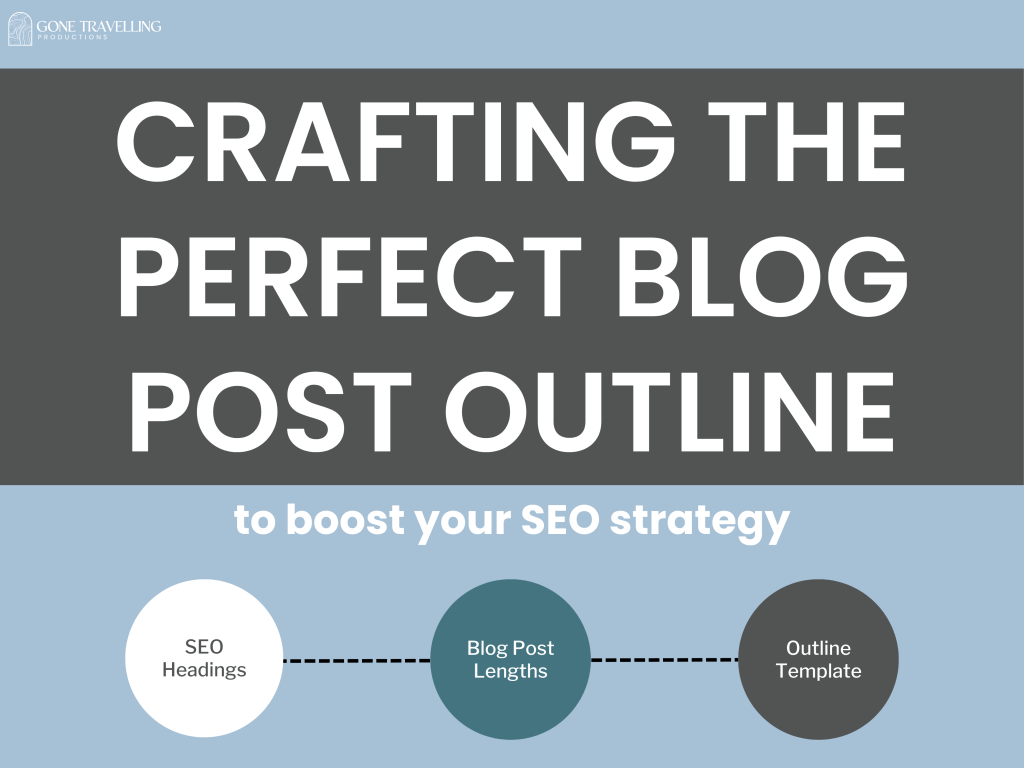
There’s a generally agreed upon ‘best practice’ when it comes to structuring a blog post outline for SEO strategy, and luckily it’s very easy to learn. I’ve been posting on this blog for almost a year and through a lot of trial and error, I think I’ve cracked the code for creating a blog post outline that makes writing a new post feel actually easy.
Using a blog outline can make the stress of SEO, writing motivation, and blank page paralysis just melt away completely. That’s why I’m sharing my personal blog outline template with you. Now there’s no excuse not to get writing on your next post idea!
Keep reading to learn:
- Why You Need a Blog Post Outline
- SEO Headings Best Practice
- Blog Post Outline Template Breakdown
- What is the Ideal Blog Post Length for SEO Strategy?
- My Blog Post Call to Action in Action
Why You Need a Blog Post Outline
The short answer is that you don’t need a blog post outline. Writing is a free and fluid experience. If you’re looking to start a blog for the love of writing or sharing your experiences then a blog post outline is not really necessary.
However, if you want to post consistently and use your blog to grow an audience, a blog post outline can really come in helpful. A blog post outline can work to:
- Streamline the writing process
- Improve SEO strategy
- Make posts easier to read
A great blog post outline essentially sets up a post for success every single time, without you even having to think about it. I use my blog post outline template for all of my posts (yes, including this one) and it’s saved me hours of time. It’s one of the easiest ways to instantly up your SEO strategy for every post you write and publish in the future.
SEO Headings Best Practice
The most important aspect of a blog post outline is understanding SEO headings. Obviously, headings are used in traditional writing to separate paragraphs and sub-topics, but they also play a key part in online writing.
This is because search engines (aka Google) have learnt to scan web pages for headings to understand what the post is about. In other words, you can use SEO headings to directly tell Google what search terms you want to rank for.
Typically, SEO headings are split into three types: H1, H2, and H3. These refer to both the size of the text and its importance with 1 being the biggest and most important, then getting less with each number.
SEO and H1 Headings
H1 headings are the largest and most important elements of your blog post outline. In almost every case, you should be using just one H1 heading per post – the title. It’ll sit at the top of the page and contain your most important SEO keywords.
E.g. for this post, the H1 Heading is ‘Crafting the Perfect Blog Post Outline to Boost Your SEO Strategy’.
SEO and H2 Headings
H2 headings are essentially your subheadings. They’re used to introduce different paragraphs/ideas and split your post into more managable chunks instead of one long wall of text. Thinking about how posts look on the page is just as important as your SEO strategy when it comes to blog outlines – if people can’t read your posts, they’re just going to immediately click away.
E.g. for this post, the H2 headings are:
- Why You Need a Blog Post Outline
- SEO Headings Best Practice
- Blog Post Outline Template Breakdown
- What is the Ideal Blog Post Length for SEO?
- My Blog Post Call to Action
SEO H3 Headings
I’m sure you’ve put together that H3 headings are used underneath the H2 headings to highlight smaller pieces of information or sometimes items in a list. These are the least important for SEO strategy and mostly come into play in making information as visually clean as possible.
E.g. in this section, I’ve used H3 headings:
- SEO and H1 Headings
- SEO and H2 Headings
- SEO and H3 Headings
Read More:

Elements of a Blog Post: SEO Formatting for Beginners
Discover the best blog SEO practices to launch a new blog for beginners.
Blog Post Outline Template Breakdown
You can use this blog post as a great blog post outline template. Here’s the element breakdown:
Title
Your H1 heading.
Blog Intro
You need a catchy intro that immediately grabs the attention of the reader and gets straight into the action. Keep the intro pretty short (two or three paragraphs at most) and make sure to clearly state what the rest of the blog post is going to be about.
Top Tip: Leave writing your blog intro until last. It’s a lot easier to put it together once you know exactly what the rest of the blog post contains!
H2 Headings
Aim to use between three and five SEO H2 headings to break up the information in your post. To choose these I recommend doing some keyword research to find lesser searched terms related to your main keyword.
H2 headings might be written as questions or titles depending on the topic itself.
Blog Text
Under each H2 heading should be a few paragraphs of text. To keep it readable, try and make your paragraphs shorter than in traditional writing, usually no more than three sentences. Aim to have at least 50 words under each H2 heading – if it’s any less than this then the subject probably doesn’t need its own section.
H3 Headings
You might need to split up the text in each section one step further with H3 headings. Make sure to write one to two sentences beneath each of these.
Conclusion and Call to Action
End the post by pulling all the information together in a summary of shorts. It can be super brief (I’m talking three sentences) so long as it is relevant to the topic and draws to a satisfying end. A conclusion is important for a blog post outline as it also provides the opportunity for your call to action (or CTA).
This is when you invite the reader to do something relating to your blog. You already have their attention and want to keep that going through things like:
- Asking them to subscribe to an email list
- Click to another article
- Leave a comment below
What is the Ideal Blog Post Length for SEO Strategy?
Using the optimal length of a blog post plays a role in how search engines are going to rank it. Too short and you won’t seem knowledgeable enough, but too long and you’ll be wasting your time for diminishing results.
Using a blog post outline with the best length blog post for your website means hitting a goal word count every time without stress. I literally never have to think about how to write enough, all thanks to my blog post template.
The ideal blog post length will depend on the type of website you’re writing for. Here’s a rough guide for you to use:
Small Niche Site
For small niche sites with non-competitive keyword topics, you don’t need to prove as much expertise with length. The best blog post length for your blog outline is:
- 300-500 words
- Three H2 headings
Regular Posting for a Competitive Niche
This will apply to most blogs! If you’re trying to improve your SEO strategy and domain rank, you need to be posting often and consistently. Most niches need more than 500 words per post, but 5000 words just isn’t realistic for weekly posting. The optimal length and blog post outline is:
- 1000-2000 words
- Three to six H2 headings
Highly Competitive Pillar Posts
These are your most important pages that you want to rank the highest with. They’ll usually interlink with a lot of other posts on your blog and are used to prove that you’re an expert on this topic. Not every post needs to be this comprehensive, try and aim for one for each of your topic clusters. To achieve this you’ll need:
- 2000-5000 words
- Five to ten H2 headings
My Blog Post Call to Action in Action
Here I am, practising what I preach! There’s a lot of information in this post, but the key things to remember are the SEO headings, the best length for blog posts, and how to create your own perfect blog post outline.
Need some more information on how to level up your SEO strategy? Check out the post below on free(this is the CTA, if you haven’t realised already)!
Read More:
14 Free Blogging Tools to Grow Your Audience (that I actually use)
Discover the best 14 free apps and websites to help you on the journey to running a successful blog.


 Gone Travelling Productions
Leave a comment